In the body’s digestion and circulation system, ethyl alcohol (the type of alcohol we drink, also called ethanol) remains unchanged. It, in its original, non-metabolized form, affects the central nervous system in ways we’re all familiar with.
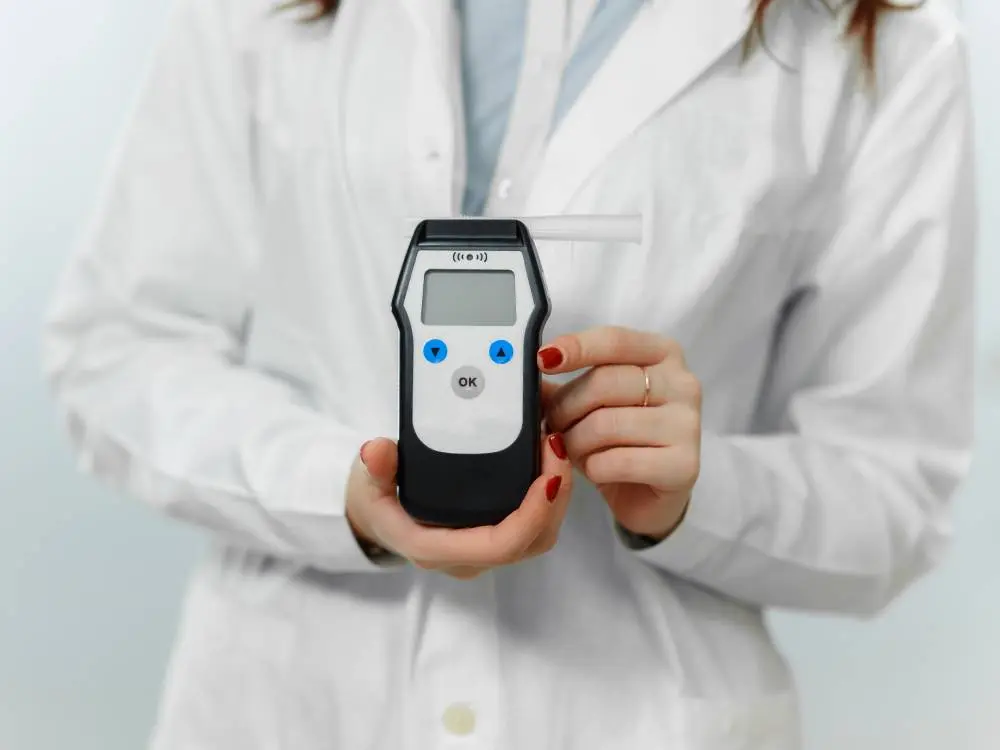
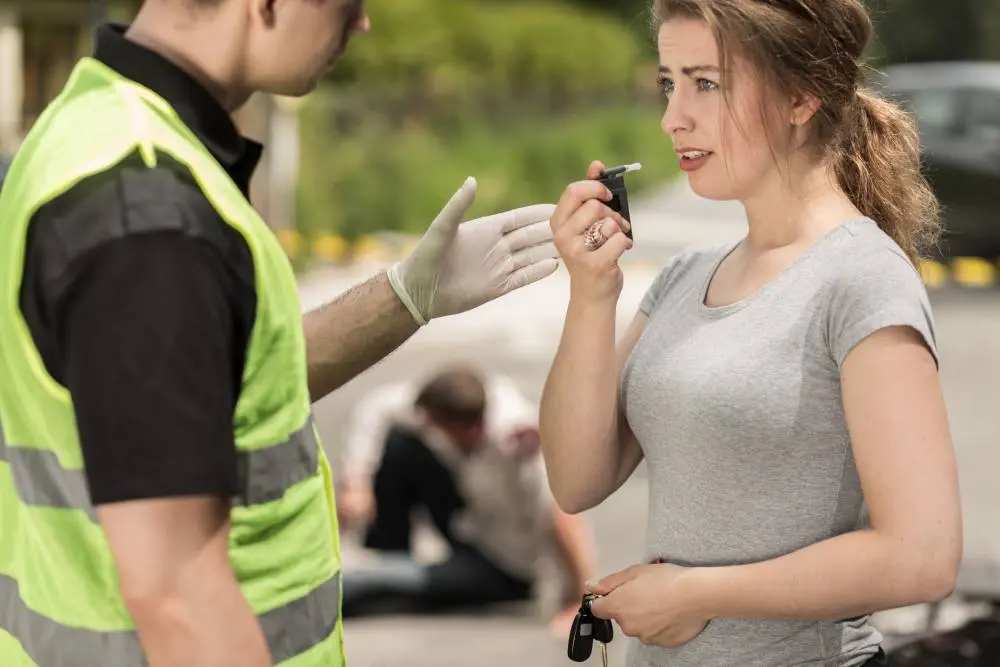
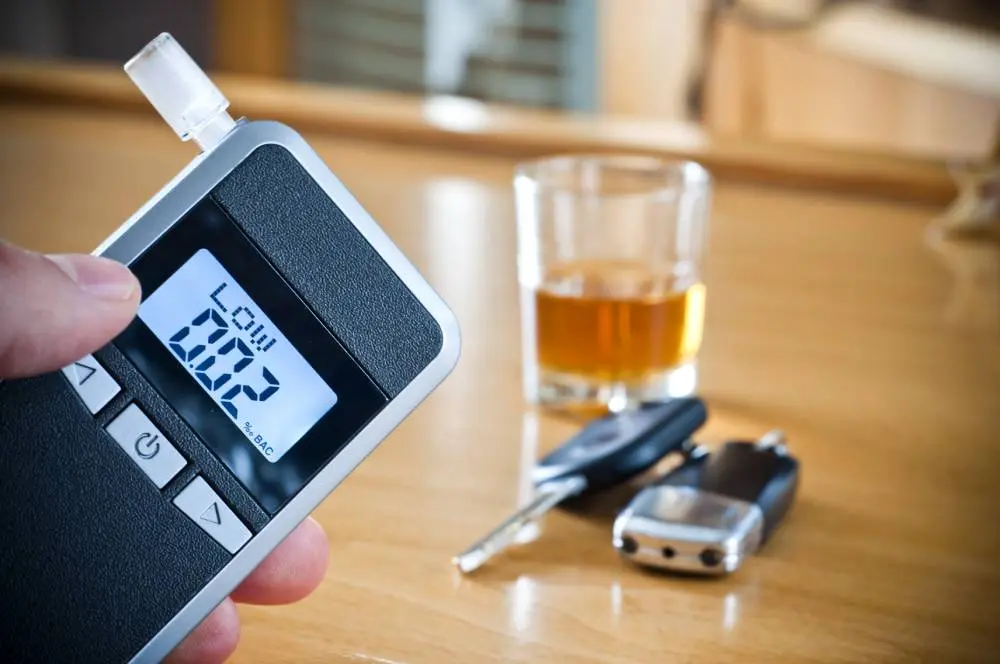
While the alcohol is still in the bloodstream, the blood passes through the lungs. Some of this alcohol is passed out of the bloodstream into the air sacs in the lungs called alveoli. In a breath test, air from the alveolar, which contains some alcohol, is exhaled by the suspect into the machine, which then measures the amount of alcohol in the breath.
However, the amount of alcohol in 1 milliliter (mL) of alveolar air is not the same as the amount of alcohol in 1 mL of blood. These two amounts are directly proportional, though, meaning that as the amount of alcohol in the blood increases, so does the amount of alcohol in the alveolar air. We can see this conceptually by thinking of the alcohol (C2H5OH) molecules bouncing around in the bloodstream along with carbon dioxide (CO2) and oxygen (O2) molecules (All molecules are moving around rapidly).
The job of alveoli is to exchange all kinds of gases in the blood. For the most part, CO2 leaves the bloodstream and O2 enters. Ethyl alcohol is volatile, meaning that it tends to become a gas when it’s dissolved in liquid. Thus, when the alveoli are pulling gases out of the blood, ethanol is one of those gases. As the number of alcohol molecules in the blood increases, the alveoli pull more alcohol out of the bloodstream. This alcohol that goes into the alveoli is breathed out in the alveolar air and is then measured by the Intox EC/IR II.
The average ratio of alcohol in alveolar air to alcohol in blood is 2,100:1 – called a partition ratio in the law. According to Dr. Srikumaran K. Melethil, Professor of Pharmacology at the University of Missouri at Kansas City, the ratio can range from 1,900:1 to 2,400:1, and the value of 2,100:1 was picked by a panel in 1972. Everything from body temperature to the composition of the particular test subject’s blood to physical activity can affect a person’s partition ratio. Unfortunately, because the ratio is defined by state law, there’s no purpose in arguing that yours is different or that the conditions changed your partition ratio.